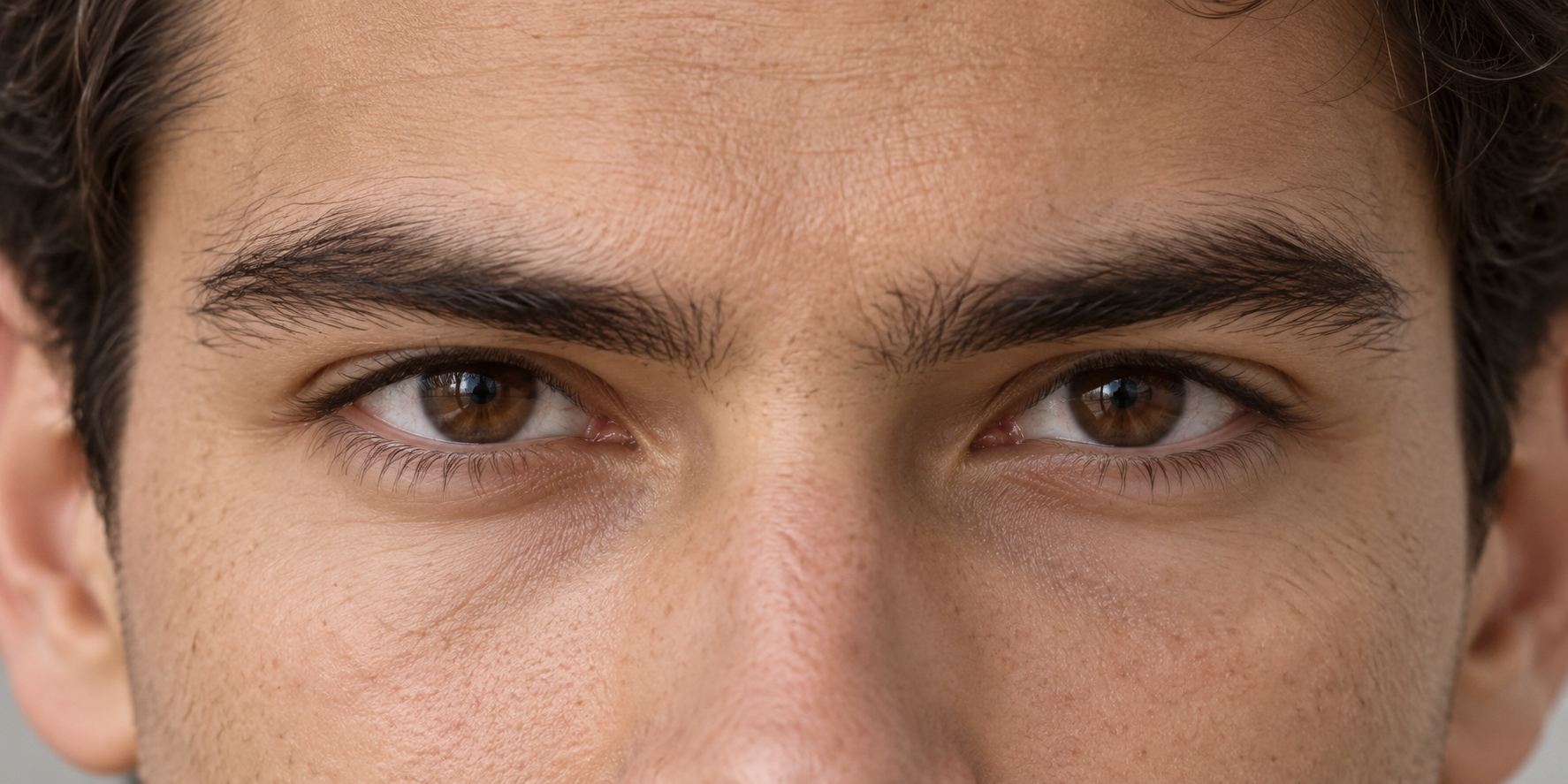
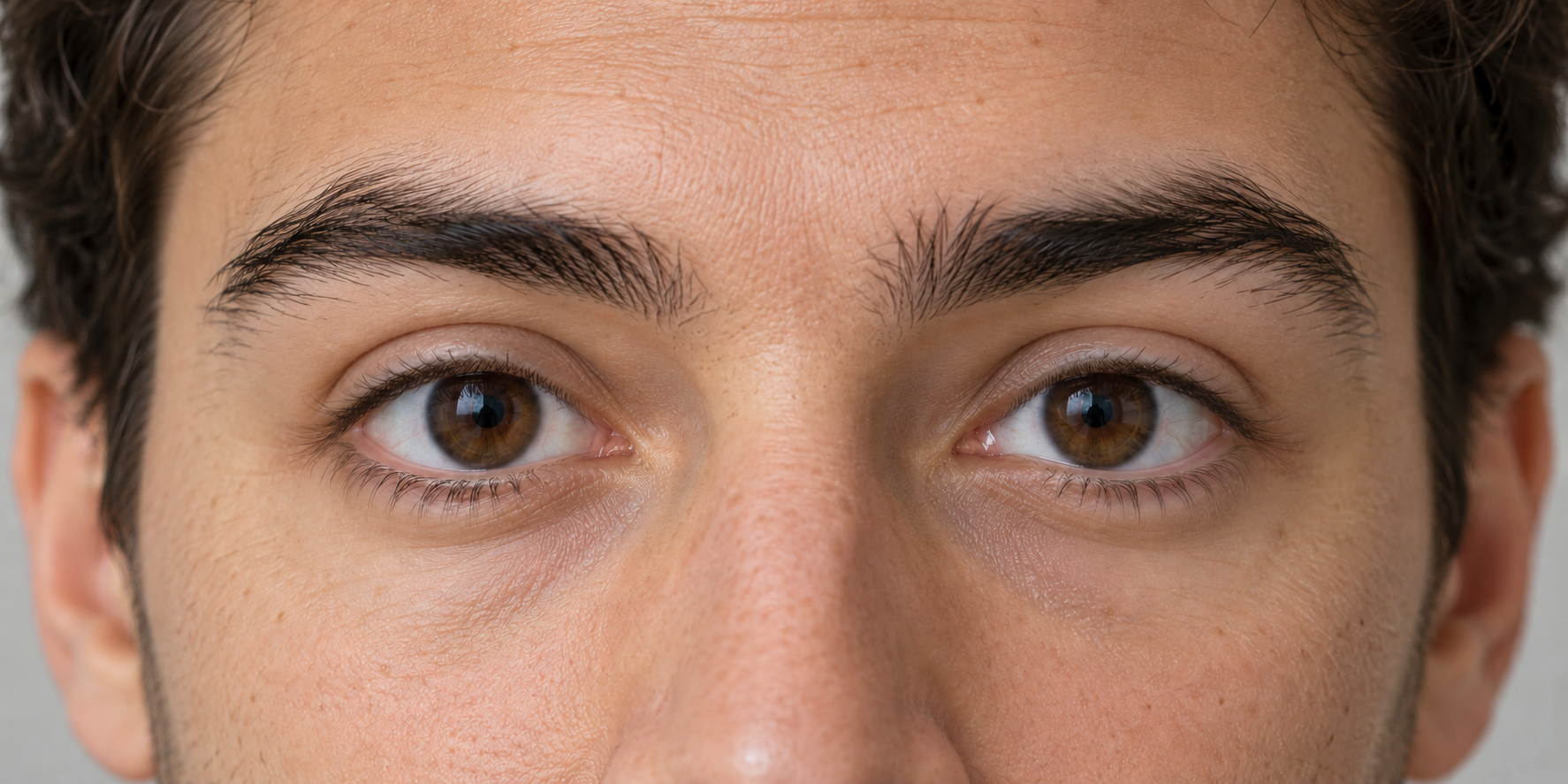
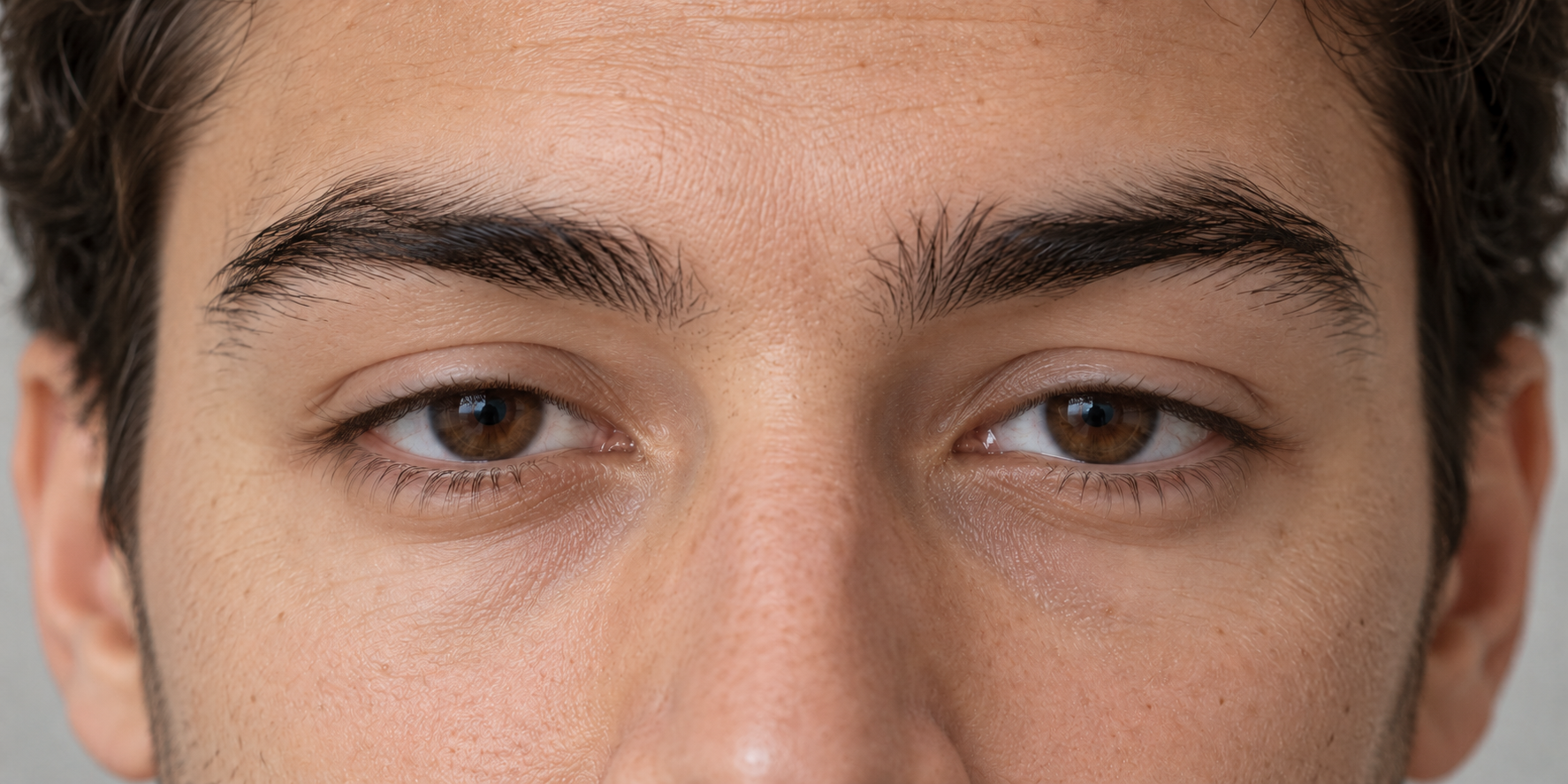
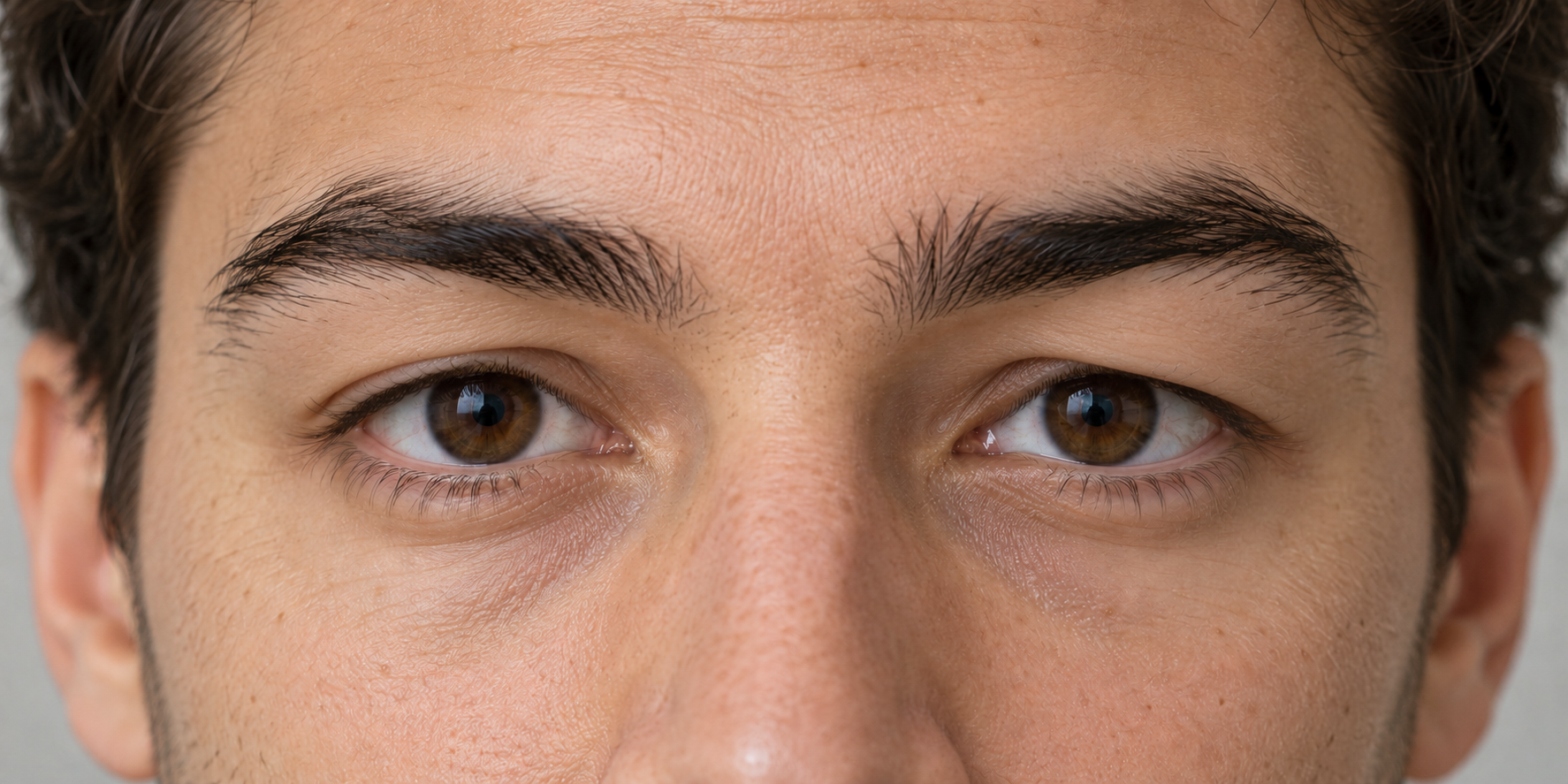
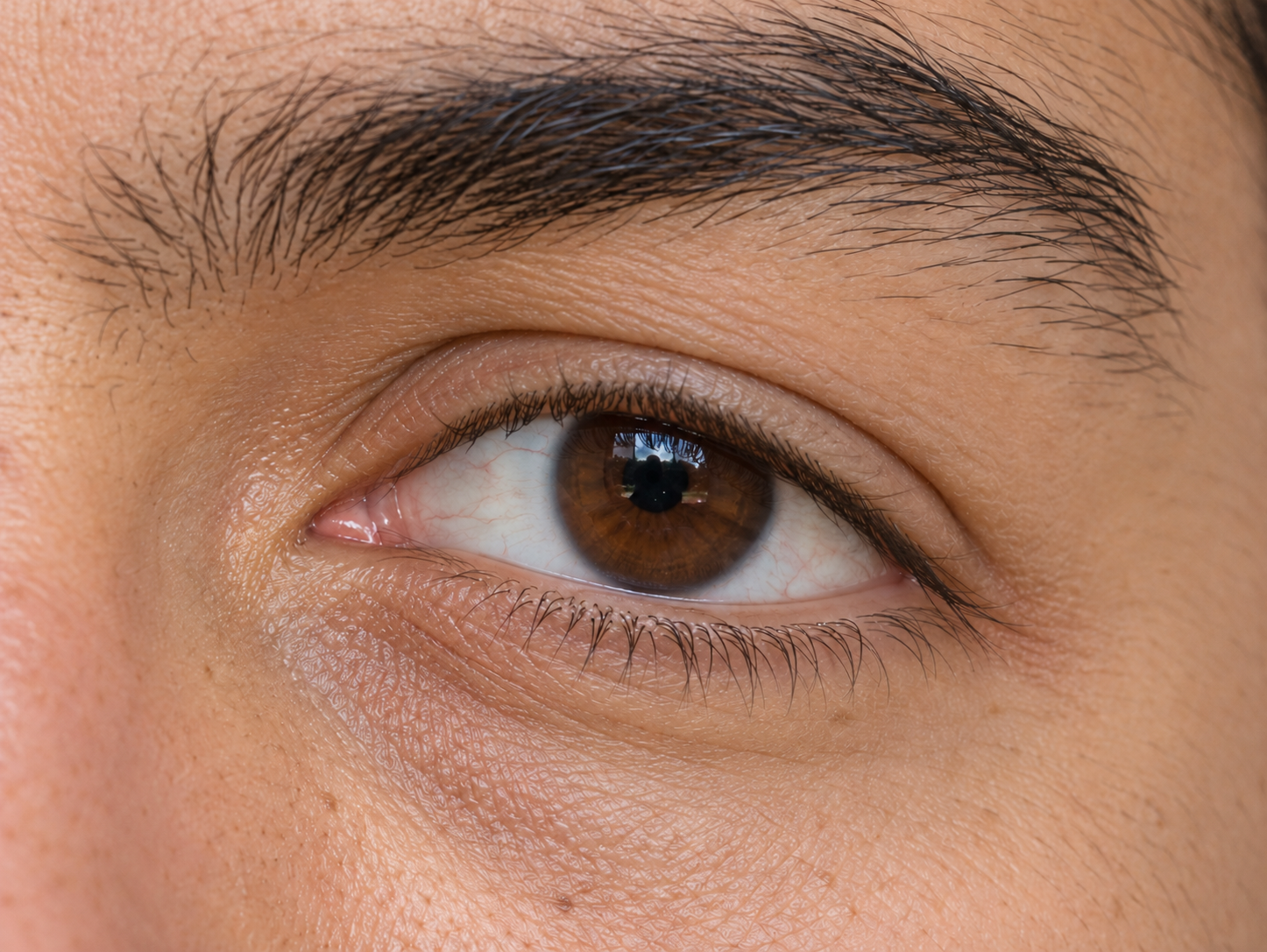
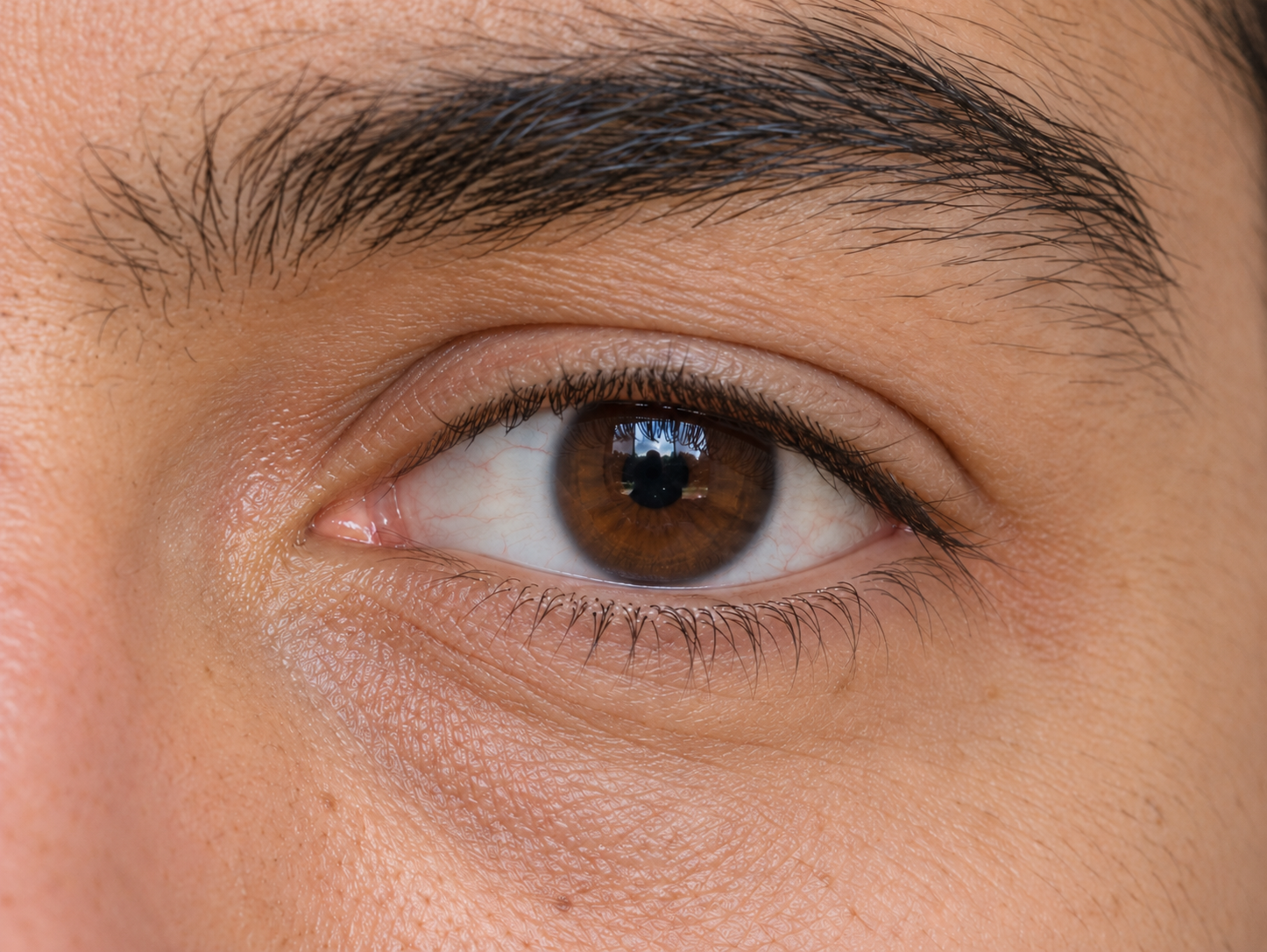
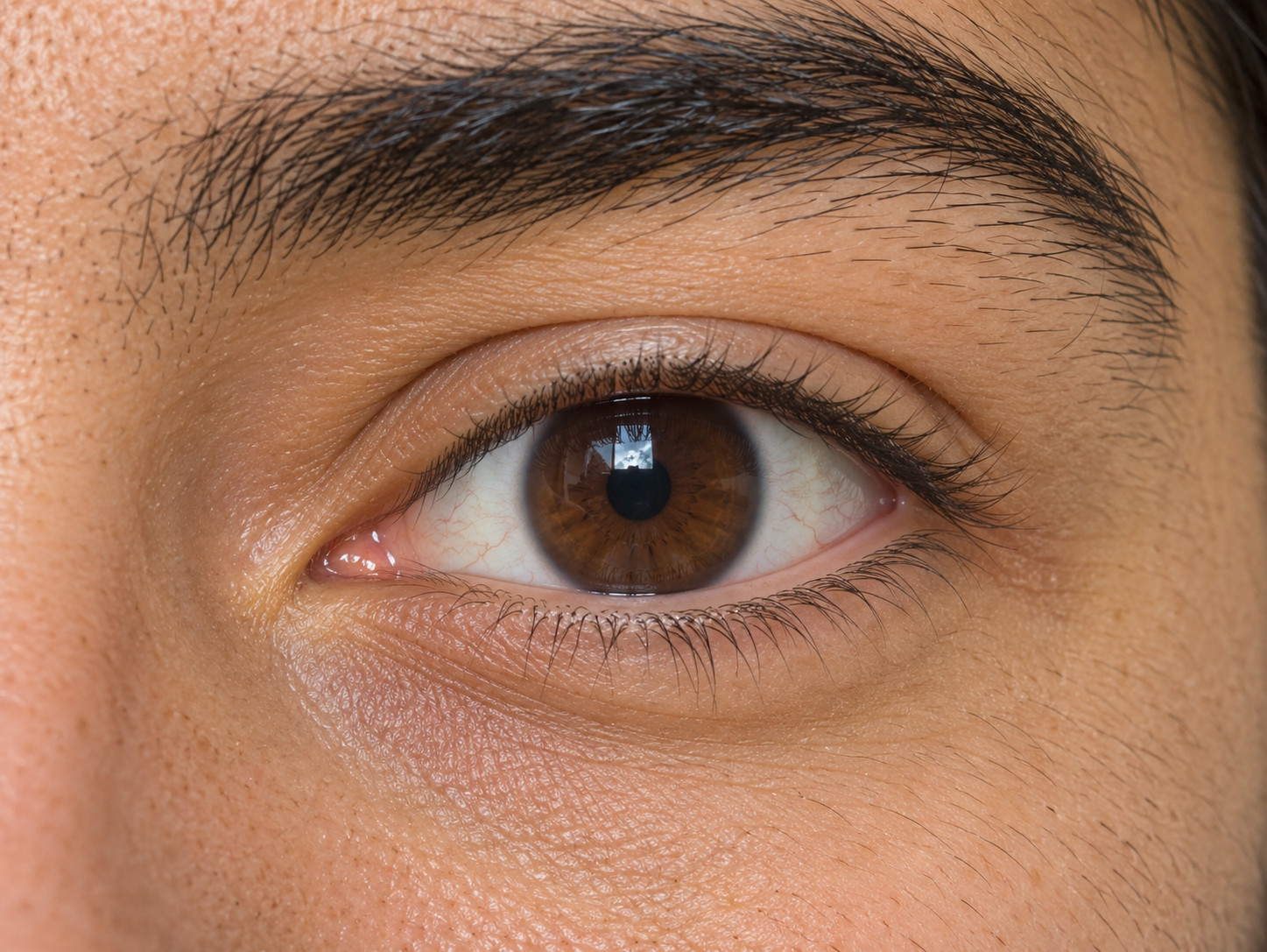
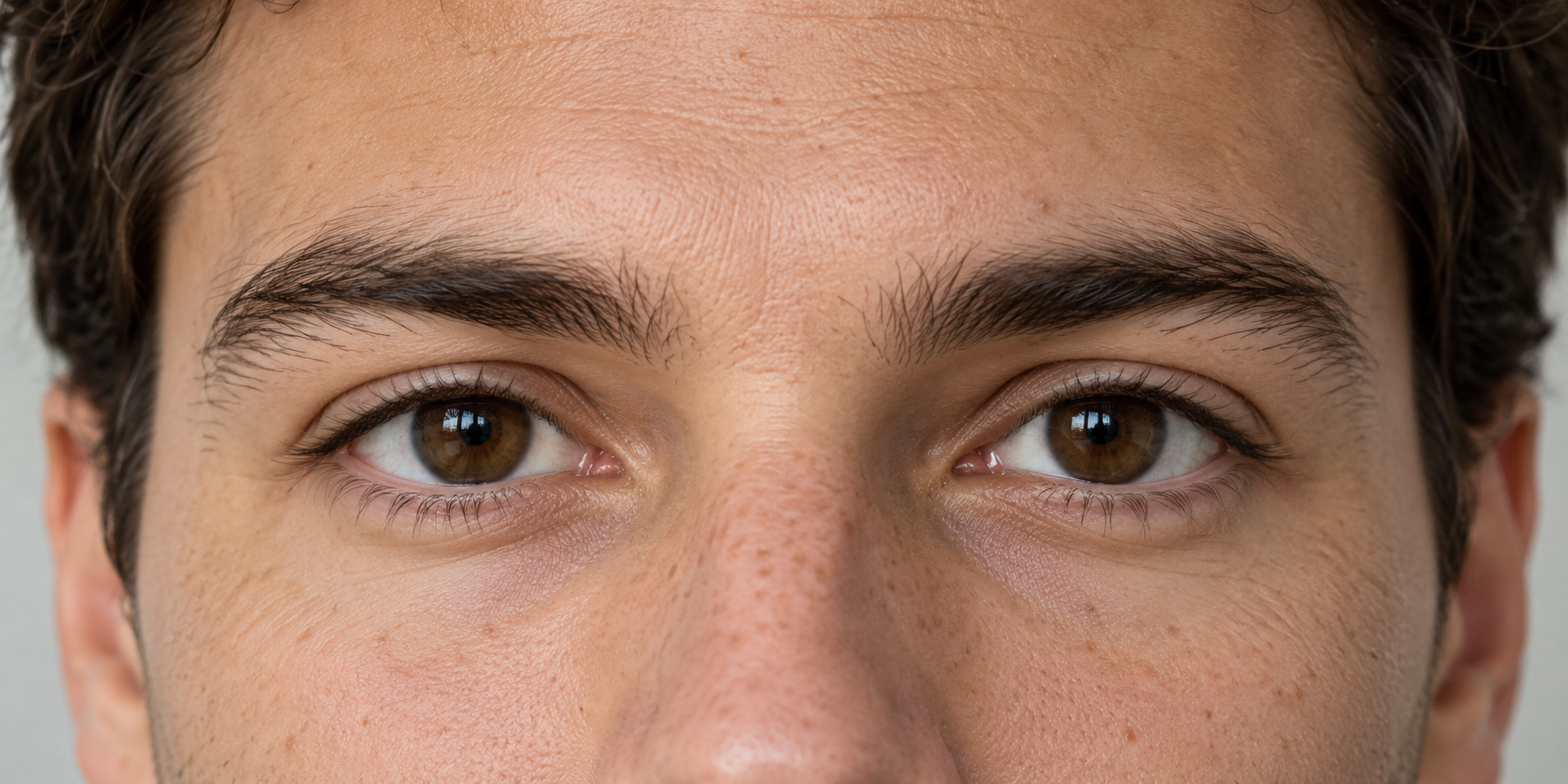
Upload one photo to see your 0-100 Hunter Eyes Score, four measurements and eye-area analysis images. Explore canthal tilt, iris coverage, eye shape and brow spacing.
Choose a Photo to Begin
Choose a complete, straight-on face photo for experimental eye-area measurements.
Drop your photo here or choose a file.
Use a straight-on photo with both eyes open and relaxed.
or
JPG or PNG · Max 10 MB
No more than 40 megapixels.
HEIC or HEIF? Export as JPG or PNG first.
Only clicking Measure sends your photo for temporary server analysis.
Free · No account · Experimental measurements and match score
Clicking Measure sends your complete photo to the analysis service. Temporary server files are deleted after processing. Your browser keeps the result until you clear it or leave this page. Privacy details
Works best: straight-on photo, both eyes open, no glasses, natural light.
Example reading
Canthal tilt
+6.2°
Upper iris coverage
25%
Eye ratio
0.24
Brow gap G/W
0.19
The four measurements behind a hunter eyes reading
EXAMPLE READING · 01
+6.2°
positive
Canthal tilt
The angle from the inner corner of your eye to the outer corner, measured against horizontal after head-roll correction. Positive means the outer corner sits higher.
NegativeNeutralPositive
Negative
< -1°
outer corner sits lower
Neutral
-1° to +1°
roughly level
Positive
> +1°
outer corner sits higher
EXAMPLE READING · 02
25%
high
Upper iris coverage
How much of the estimated iris height is covered by the upper eyelid when your eyes are open and relaxed. After head-roll correction, the covered height is divided by the iris height estimated from MediaPipe landmarks. This measures height, not area or visible eyelid skin.
LowMediumHigh
Low
≤ 5%
little estimated iris height covered
Medium
> 5% and < 22%
some estimated iris height covered
High
≥ 22%
more estimated iris height covered
EXAMPLE READING · 03
0.24
narrow
Eye shape
The central eye-opening height divided by eye width (H/W). Lower numbers describe a narrower, more elongated opening.
NarrowNeutralRound
Narrow
< 0.26
elongated opening
Neutral
0.26-0.30
balanced
Round
> 0.30
taller opening
EXAMPLE READING · 04
0.19
No geometry categories
Brow-to-eye distance
The gap from the lower brow boundary to the upper eyelid edge, divided by eye width (G/W). Smaller values mean closer brow spacing in the photo. This component contributes 20% of the Hunter Eyes Score, with 0.10-0.20 receiving its highest score under this version's rules. It measures photo spacing, not brow-bone depth.
No geometry categories
G/W
measured gap divided by eye width
Geometry categories describe the measurements; component scores describe how closely they match this version's hunter eyes rules. A positive tilt or narrow opening is not automatically a high match: scores reach a high range and then decline at extreme readings. Upper iris coverage uses 5% and 22% for geometry categories, while 15%-25% receives its highest match score. These are experimental product rules, not medical or population standards.
What are hunter eyes?
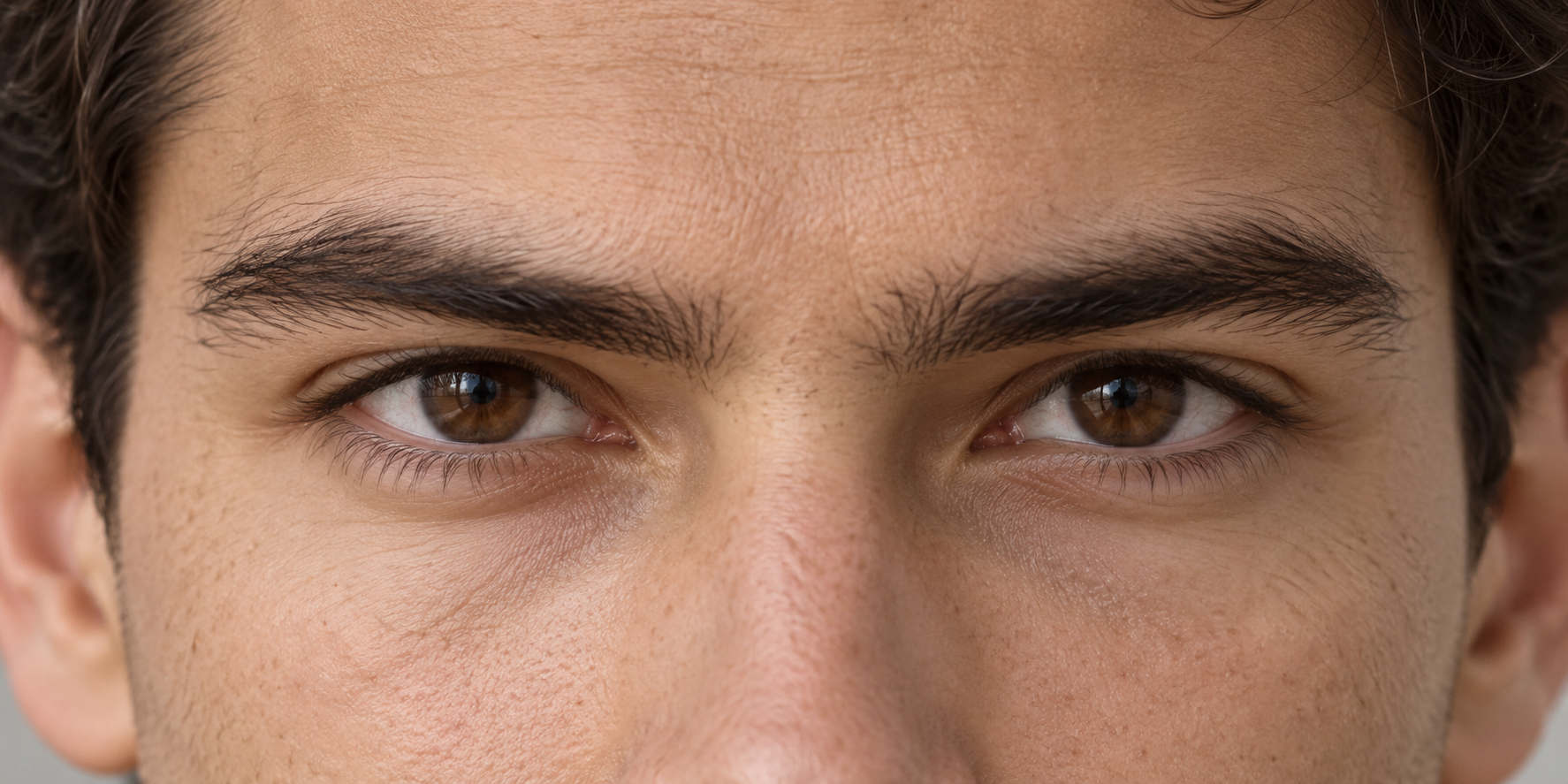
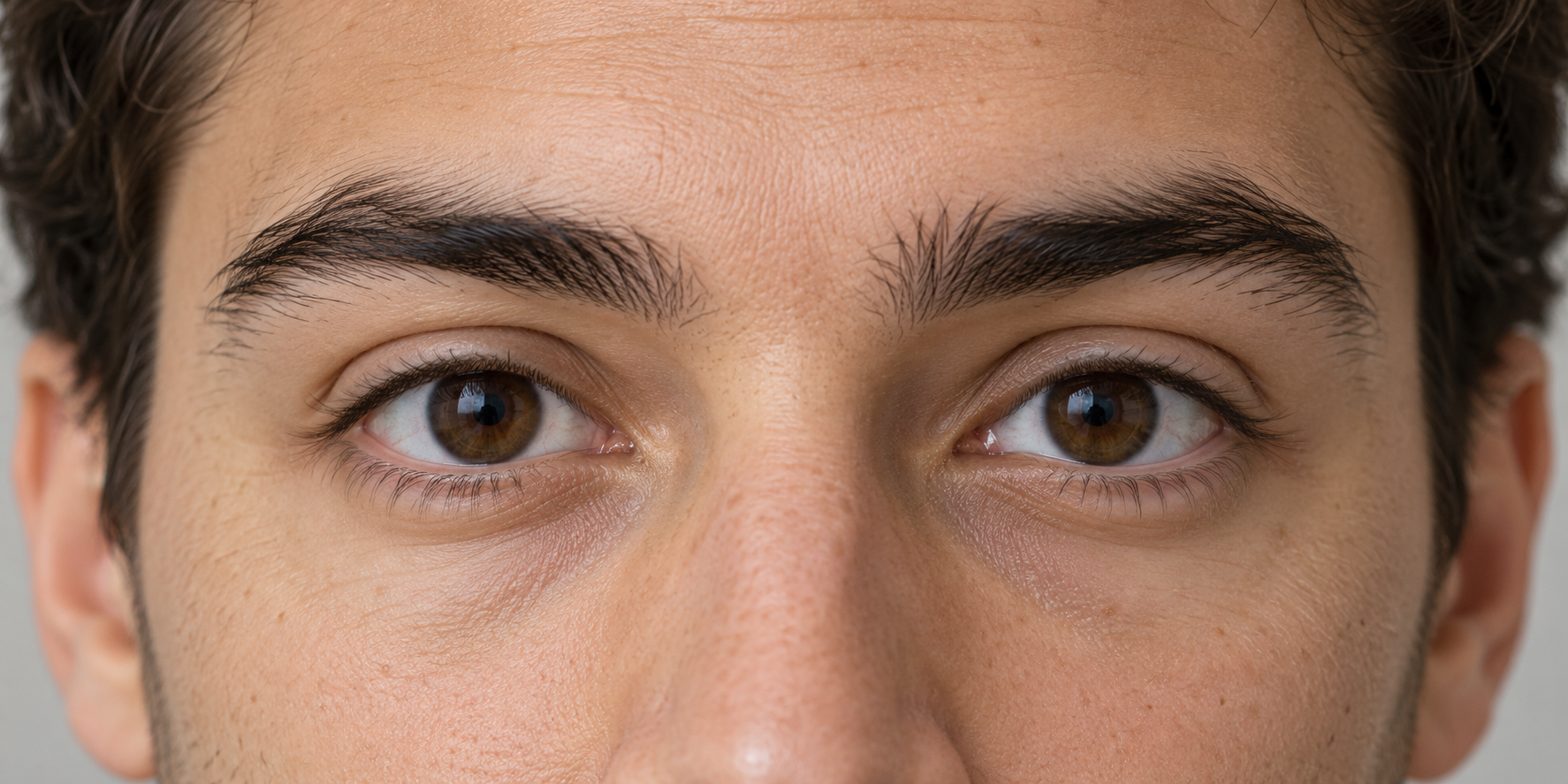
The term comes out of looksmaxxing forums, where it describes a narrow, deep-set eye area: an elongated opening, the outer corner sitting slightly higher than the inner corner, very little upper lid showing, and a brow that sits close to the eye.
The overall effect is a shadowed, hooded eye area rather than a wide, round, open one.
Hunter eyes
Prey eyes
It is a descriptive label, not a diagnosis.
This test reports four separate measurements - canthal tilt in degrees, upper iris coverage as a percentage of estimated iris height, eye shape as a height-to-width ratio, and brow-to-eye distance as gap divided by eye width.
Upper iris coverage describes how far the upper eyelid covers the estimated iris; it does not measure visible upper-lid skin or hooding.
What it is not: a measure of attractiveness, a medical finding, or a fixed trait.
Eyelid puffiness, lighting, camera angle and how relaxed your brow is will all move the numbers on a given day.
Hunter eyes vs prey eyes, sleepy eyes and hooded eyes
The four labels people mix up most.
They describe different things - three are about the eye opening, one is about the lid fold.
Hunter
Prey
Sleepy
Hooded
Swipe to compare all four measurements →
Eye area
Canthal tilt
Upper iris coverage
Eye opening
Brow
Hunter
positive
not inferred from the label
narrow, elongated
deep-set
Prey
neutral to negative
not inferred from the label
round, taller
shallower
Sleepy
usually neutral
not inferred from the label
narrow but drooping at the outer third
medium
Hooded
can be any
not inferred from the label
often narrow
any
The one people confuse most is hooded.
Hooding is about the skin fold of the upper lid; upper iris coverage measures the position of the eyelid edge over the estimated iris instead.
The Hunter Eyes Score combines four features; iris coverage is one part of that reading, while hooding describes a different structure.
Canthal tilt: the number that moves the reading most
Draw a line from the inner corner of your eye to the outer corner and compare it with horizontal.
If the outer corner sits higher, the tilt is positive.
Level is neutral.
Lower is negative.
Negative
< -1°
Neutral
-1° to +1°
Positive
> +1°
It shows the direction of the eye line directly: whether the outer corner sits above, level with or below the inner corner.
The test reports that angle in degrees alongside the other measurements. The Hunter Eyes Score combines four component match scores with fixed weights, while keeping the original geometry visible.
The test corrects for head roll before measuring the angle.
A straight-on photo still helps: turning away from the camera, perspective and uncertain eye-corner detection can change the reading.
Use the analysis lines to check that the detected corners follow your eyes.
Read the guide to negative canthal tilt for degree definitions, photo measurement and the limits of a reading.
Are hunter eyes the same as hooded eyes?
No.
Hooded eyes describe the skin fold of the upper lid covering part of the lid crease, which is a lid structure.
Hunter eyes describe the whole eye area, including canthal tilt, eye opening shape and brow position.
You can have hooded eyes with neutral tilt, or hunter-leaning tilt without hooding.
What to do with this reading
Nothing here changes bone structure.
What it can do is tell you which of the four numbers is actually moving and which is doing the work in photos.
Relax the brow
Raising the brow changes the position of the upper eyelid and the brow-to-lid gap.
Keep your brow relaxed for a more comparable photo reading.
Keep the eyelids relaxed
Upper iris coverage measures where the upper eyelid sits over the estimated iris.
Squinting or deliberately widening the eyes can change the reading; look normally at the camera.
Use angle and light deliberately
Overhead light deepens the brow shadow; a camera at eye level rather than below keeps the tilt reading honest.
This is the difference between a photo that looks like your reading and one that doesn't.
What doesn't change
The readings describe the geometry visible in a photo.
Brow-to-eye distance is a two-dimensional gap ratio; it does not measure bone structure or predict a treatment result.
Three example readings
One measured result from an AI-generated full-face photo, followed by two illustrative readings. Readings B and C are not measurements of their images.
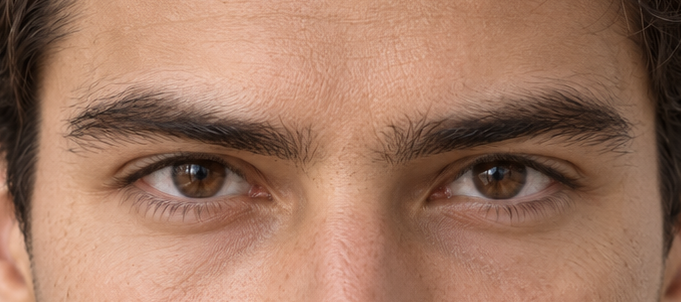
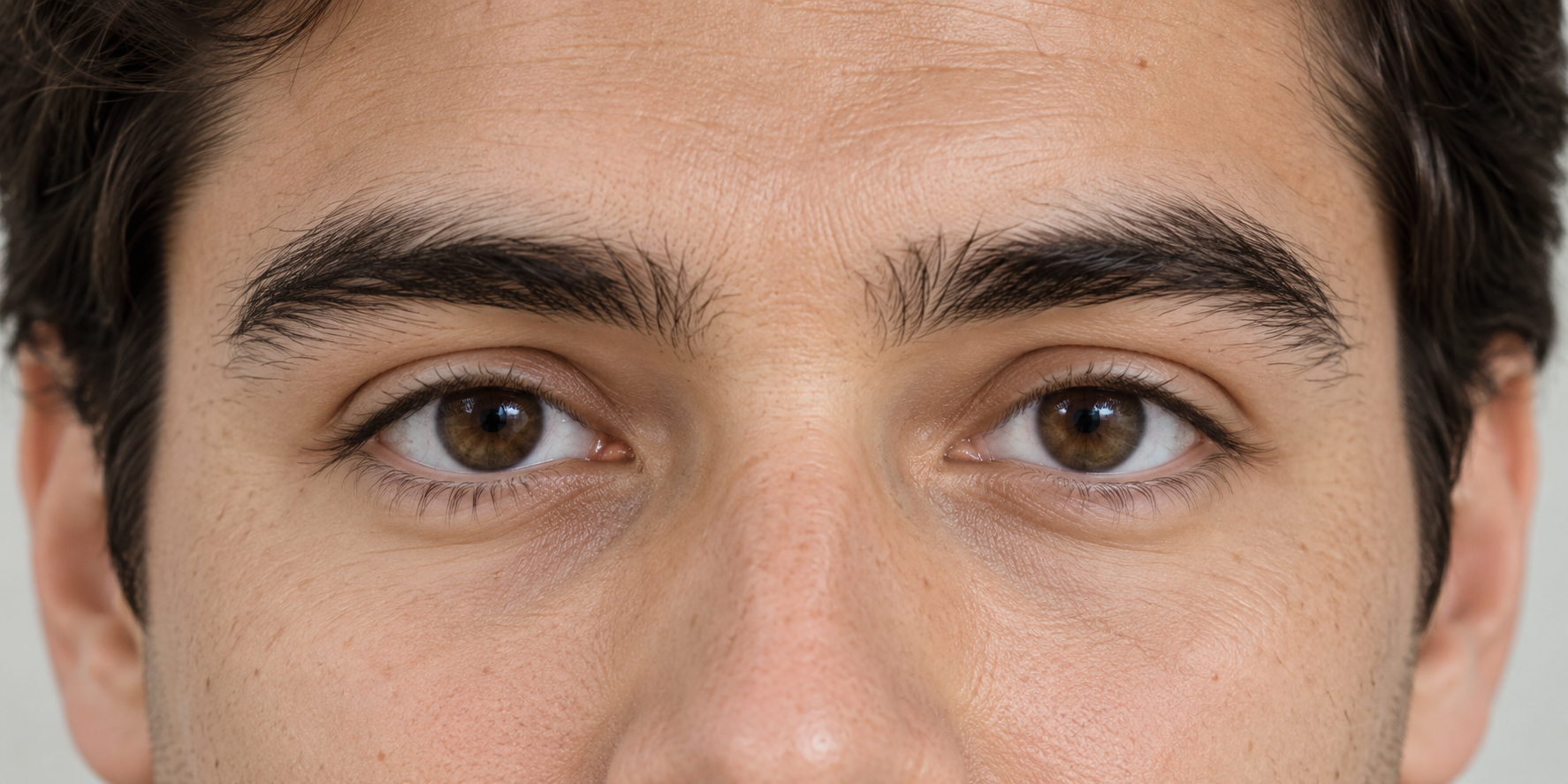
Measured example - 94/100
Tilt
+7.23°
Iris coverage
18.42%
Eye ratio
0.293
Brow gap G/W
0.136
Strong match. The complete AI-generated face was analyzed; the image shows its measured double-eye crop.
Illustrative slight positive tilt, medium iris coverage and a more open eye.
These numbers are examples, not measurements of this image.
Reading C - prey-leaning
Tilt
-2.1°
Iris coverage
3%
Eye ratio
0.32
Brow gap G/W
0.29
Illustrative negative tilt, low iris coverage and a rounder opening.
These numbers are examples, not measurements of this image.
Frequently asked questions
01Do I have hunter eyes?
Upload a photo to get a 0-100 Hunter Eyes Score and a match level, followed by four component scores, measured values and analysis images.
The result explains how canthal tilt, upper iris coverage, eye shape and brow spacing contribute to your match.
The score follows fixed experimental product rules; it is not an attractiveness score or population ranking.
02What do hunter eyes look like?
A narrow, elongated eye opening with the outer corner sitting slightly higher than the inner corner, little visible upper lid, and a brow that sits close to the eye.
The result is a deeper, more shadowed eye area rather than a wide, round, open one.
03Can you tell from a photo whether someone has hunter eyes?
A straight-on photo in natural light, with both eyes open and relaxed and no glasses, can support an eye-area reading.
The test corrects head roll, but turning away from the camera, squinting or deliberately widening the eyes can still change the measurements.
The analysis diagrams show the detected points and measurement lines so you can inspect the reading.
04What is the difference between hunter eyes and prey eyes?
The labels usually describe differences in canthal tilt, the shape of the eye opening and how close the brow appears to the eye.
Hunter eyes are described as more elongated with a higher outer corner; prey eyes are described as rounder and more open.
The match score combines the measured features; upper iris coverage contributes 15% rather than deciding the label on its own.
05Are hunter eyes the same as hooded eyes?
No.
Hooded eyes describe the skin fold of the upper lid covering part of the lid crease, which is a lid structure.
Hunter eyes describe the whole eye area, including canthal tilt, eye opening shape and brow position.
You can have hooded eyes with neutral tilt, or hunter-leaning tilt without hooding.
06Does canthal tilt matter more than eye shape?
In this tool, canthal tilt has a 35% weight and eye shape has a 30% weight.
These are product choices, not a universal ranking of what matters most.
Brow spacing contributes 20% and upper iris coverage 15%. The result shows each component score, its contribution and the original measured geometry.
07Are hunter eyes rare?
These experimental bands have not been calibrated to a population, so this test cannot say how rare a combined pattern is.
Its match levels describe fixed product rules, not how common your eye area is. Missing readings produce a possible-score range without a single grade.
08Can you get hunter eyes without surgery?
Expression, eyelid position, lighting and camera angle can change how the eye area appears in a photo.
For a comparable reading, use a straight-on photo with your brow and eyelids relaxed.
These photo measurements do not predict changes to bone structure or treatment results.