

Eye Shapes: Almond, Upturned, Downturned and Deep Set
Eye shape names mix three different things: the outline of the eye (almond, round), its angle (upturned, downturned) and how deep it sits under the brow (deep-set). Here are four common shapes, each on an AI-generated example with the angle and opening our analyzer measured.
Measure your eye tilt from a photo →Free, in your browser. Your photo is not uploaded.
Four common eye shapes
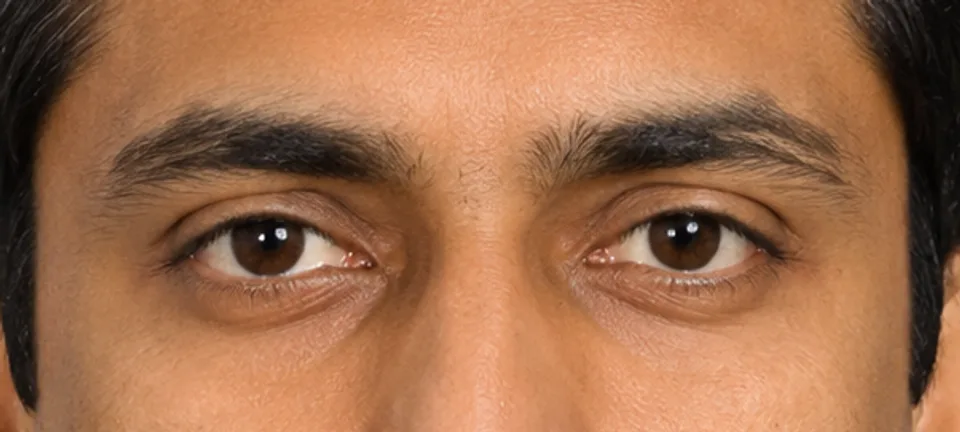
Almond eyes
Elongated, tapering to pointed corners, roughly level.
Measured tilt +4.0° · eye ratio 0.33
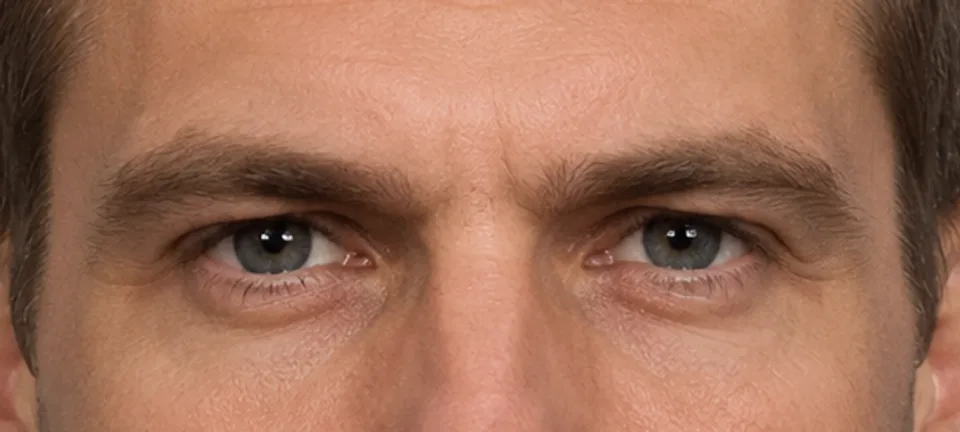
Deep-set eyes
Set back under a prominent brow bone, upper lids in shadow.
Measured tilt +4.0° · eye ratio 0.31
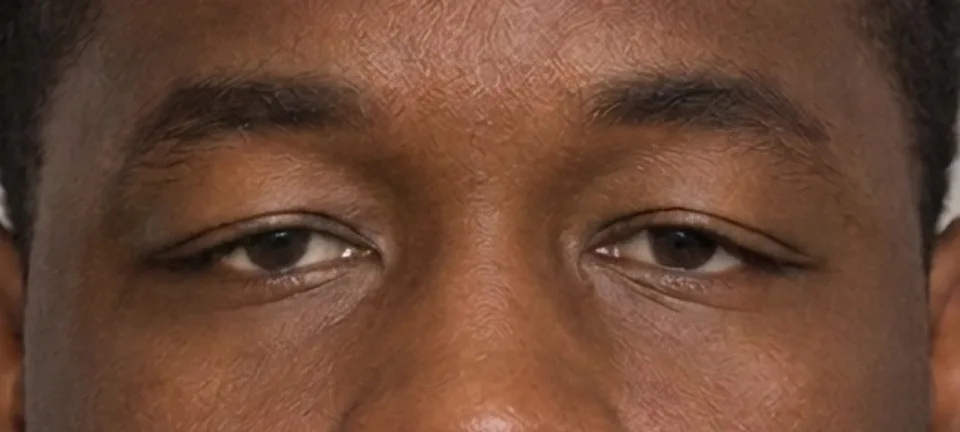
Downturned eyes
Outer corners lower than the inner corners.
Measured tilt −1.9° · eye ratio 0.23
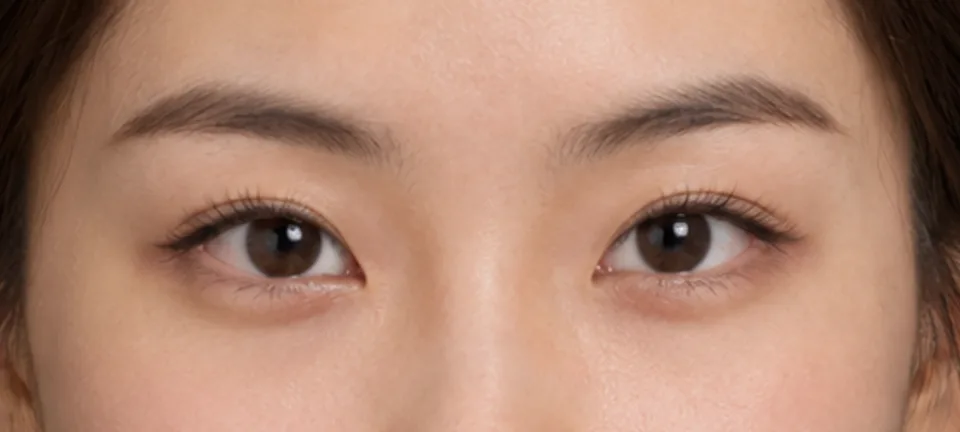
Upturned eyes
Outer corners clearly higher than the inner corners.
Measured tilt +9.9° · eye ratio 0.39
How the four example eyes measure
Tilt is the angle from the inner to the outer eye corner, levelled on the line between the irises; most adults measure a few degrees positive. The eye ratio compares how open the eye is with its width, and brow-to-lid space compares the gap under the brow with the eye's width. A flat photo cannot measure how deep an eye sits, so deep-set eyes are recognised by the brow, the shadow and a small brow-to-lid space together.
| Measurement | Almond eyes | Deep-set eyes | Downturned eyes | Upturned eyes |
|---|---|---|---|---|
| Corner-to-corner tilt | +4.0° | +4.0° | −1.9° | +9.9° |
| Eye ratio (opening ÷ width) | 0.33 | 0.31 | 0.23 | 0.39 |
| Brow-to-lid space ÷ width | 0.46 | 0.34 | 0.72 | 0.64 |
How to find your eye shape
- Look straight into a mirror or a front camera at eye level, with a relaxed face and your head level.
- Check the outline: elongated with pointed corners is almond; more open with white around the iris is round.
- Check the angle: a line from the inner to the outer corner that rises clearly is upturned, one that falls is downturned. The canthal tilt calculator measures it in degrees.
- Check the depth in profile and side light: a projecting brow bone with a hollow under it points to deep-set eyes; a fold of skin over the lid points to hooded eyes.