

High cheekbones
High cheekbones is an informal term for cheeks whose most prominent part looks pronounced or sits high on the face. People use it for two different things, how far the cheek projects and how high its most prominent point sits, and no standard measurement fixes either meaning. The bone behind the word is the zygomatic bone, which defines the front and side of the face. [1]
This guide separates prominence from position, explains the bone and soft tissue involved and shows why a photo can change how cheekbones look. It also explains how cheekbone width compares with forehead and jaw width in face shape classification, which is the one cheekbone measurement a front photo can support. The illustrations are AI-generated educational examples, not photographs of real people.
What high and low cheekbones mean
The words come from everyday talk about faces, not from a clinical scale. Two ideas get mixed together, so it helps to name them separately.
| Idea | What it describes | What a photo can show |
|---|---|---|
| Prominence | How far the cheek projects forward and to the side | Only part of it: shadow and width show it indirectly, and depth is not visible from the front |
| Position | Whether the most prominent point sits nearer the eye or nearer the mouth | Yes, as a visual impression, though light and expression move it |
| Width | How wide the face is across the cheeks compared with the forehead and jaw | Yes, with a straight-on photo and a measurement |
High cheekbones, in the position sense, describes a prominent point that sits nearer the eye. Low cheekbones describes one that sits nearer the mouth and lower face. These are informal labels without a source that fixes a boundary, so one person’s high may be another’s average.
Prominence and width also differ from position. A face can be wide across the cheeks with a low-looking prominent point, or narrow with a high one. Keeping the three ideas apart avoids the most common mix-up, which is treating a wide cheek as a high one.
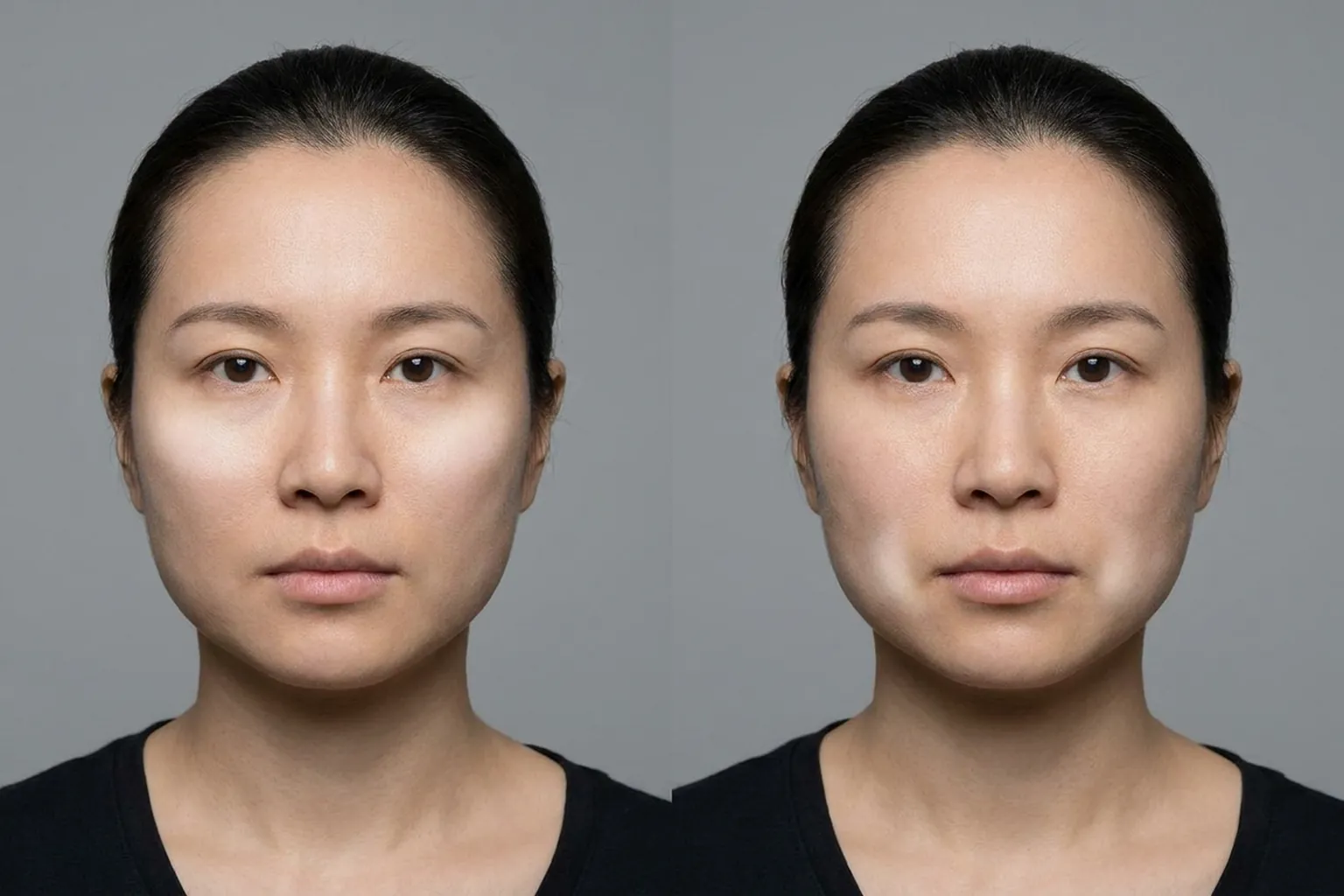
The bone and soft tissue behind cheekbones
The zygomatic bone, or zygoma, is a paired, irregular bone that defines the front and side parts of the face. The zygomatic complex helps protect the contents of the eye socket and shapes the contour of the face and cheeks. [1]
Anthropometry, the measurement of the body, has a standard word for the width. Bizygomatic breadth is the maximum horizontal breadth of the face between the zygomatic arches. [2] It is the full width of the face at the cheeks, so it works as the reference for comparing the forehead and the jaw.
The bone is not the only contributor to how a cheek looks. A dissection study of 14 half-faces described the cheek region as a set of separate fat compartments, some superficial and some deep, with one lying directly on the maxilla. [5] The authors link loss of volume in one deep compartment to age-related changes in the middle of the face. So the visible prominence of a cheek combines bone, fat and skin.
Prominence in profile is not simply a matter of the zygoma. A geometric morphometric study of humans, dogs and monkeys found that the shape of the zygomatic bone has less to do with how far the midface protrudes than the maxilla and premaxilla do. [3] The study did not set out to explain the informal idea of high cheekbones. It does show that bone shapes in this region can vary somewhat independently, so one word rarely describes a single structure.
Shapes and sizes of the zygoma also vary between groups of people. One literature review describes differences in the zygoma between ancestral groups and links them to genetic and adaptive factors. [4] That is a statement about groups of skulls, not about any one person’s face. Do not infer anyone’s background from their cheeks, and do not treat a group average as a description of an individual.
Age changes the picture as well. One review argues that certain areas of the facial skeleton, including the midface, lose bone with aging in a specific and predictable way, and that these changes contribute to the aging face. [6] It is an expert review rated at evidence level IV, so it describes a pattern rather than a figure you could apply to yourself.
How to tell from your own photo
You can read a photo without a tool. The goal is a careful description, not a label.
Take a fair photo first
Face the camera with your head upright and the lens at eye level. Use a neutral expression and soft, even light from the front. Pull hair back from your forehead and the sides of your face.
Compare three widths
Look at the width across the upper temples, across the cheeks and across the jaw near its corners. Note which is widest, and whether the widths are close or clearly different. That comparison is the basis for the face shape reading below.
Note where the cheek is most prominent
Without moving your face, look at where the widest and fullest part of the cheek sits. Describe it relative to the eye and the mouth, for example nearer the eye, midway or nearer the mouth. Write down the observation instead of choosing a word.
Repeat in different light
Take a second photo with the light from one side. If your impression changes a lot, light created part of it. Keep the photo with the softest, most even light.
Keep the limits in mind
A front photo shows width and position, not how far the cheek projects. It cannot separate bone from fat and skin. An uncertain image should lead to an uncertain description.
Two sides of a face rarely match exactly, so you may find that one cheek reads higher or fuller than the other. The asymmetrical face guide explains how common that is and how to separate it from photo effects.
Why light, expression and the camera change them
A cheekbone is seen mainly through shadow and outline. That makes it sensitive to how the photo was taken.
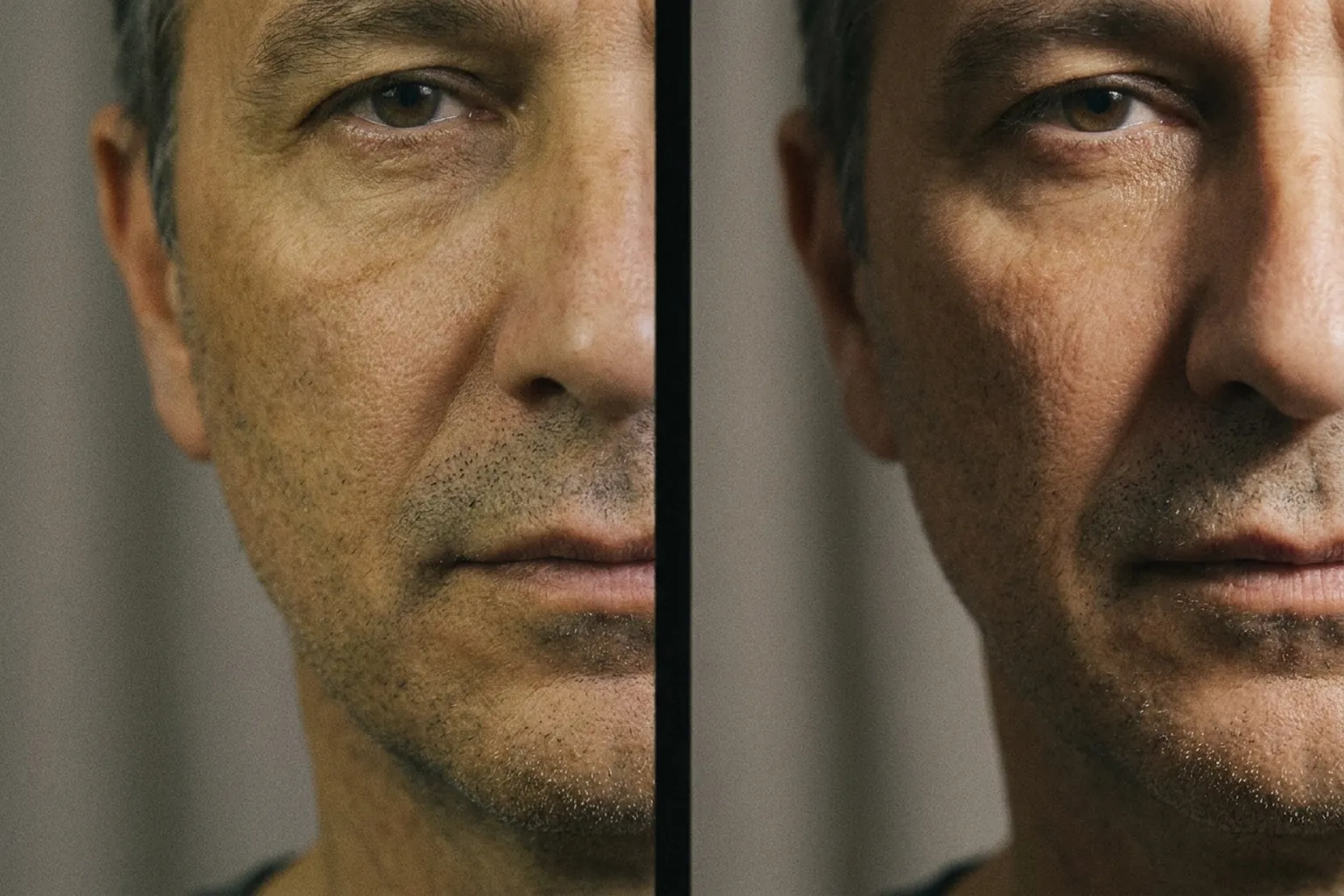
| Factor | What it can change |
|---|---|
| Light direction | Side or overhead light adds shadow under the cheek and can make it look more pronounced and higher |
| Expression | A smile widens the lower face; a neutral, closed mouth gives a cleaner outline |
| Camera distance | A close camera stretches the midface vertically |
| Head angle | A turn or tilt moves one cheek nearer the lens and shifts its outline |
| Hair | Hair over the temples or cheeks hides the outline you are comparing |
Camera distance has measured evidence. In a study of 12 subjects photographed at six distances, a smartphone at 8 inches stretched the midface vertically by 18% and at 12 inches by 12%, compared with a 60 inch full-frame reference. [7] The study measured midface stretching, not cheekbone height. It does mean a close selfie can change how the cheek area is proportioned.
The effects of light, expression and head angle in the table are general behavior of photographs, not findings from a study cited here. They are described here because they match what FaceCoda’s own guidance asks you to control: hair back, a neutral expression, front light and eye-level framing. If a result changes when you change only the light, that result is about the photo.
Cheekbones and face shape
In face shape classification, cheekbones matter as a width. The Face Shape Detector compares forehead width, cheekbone width and jaw width, together with face length, against profiles for six shapes: oval, round, square, oblong, heart and diamond. Every width is divided by cheekbone width, so the numbers do not depend on how large the face is in the photo or how far you stood from the camera.
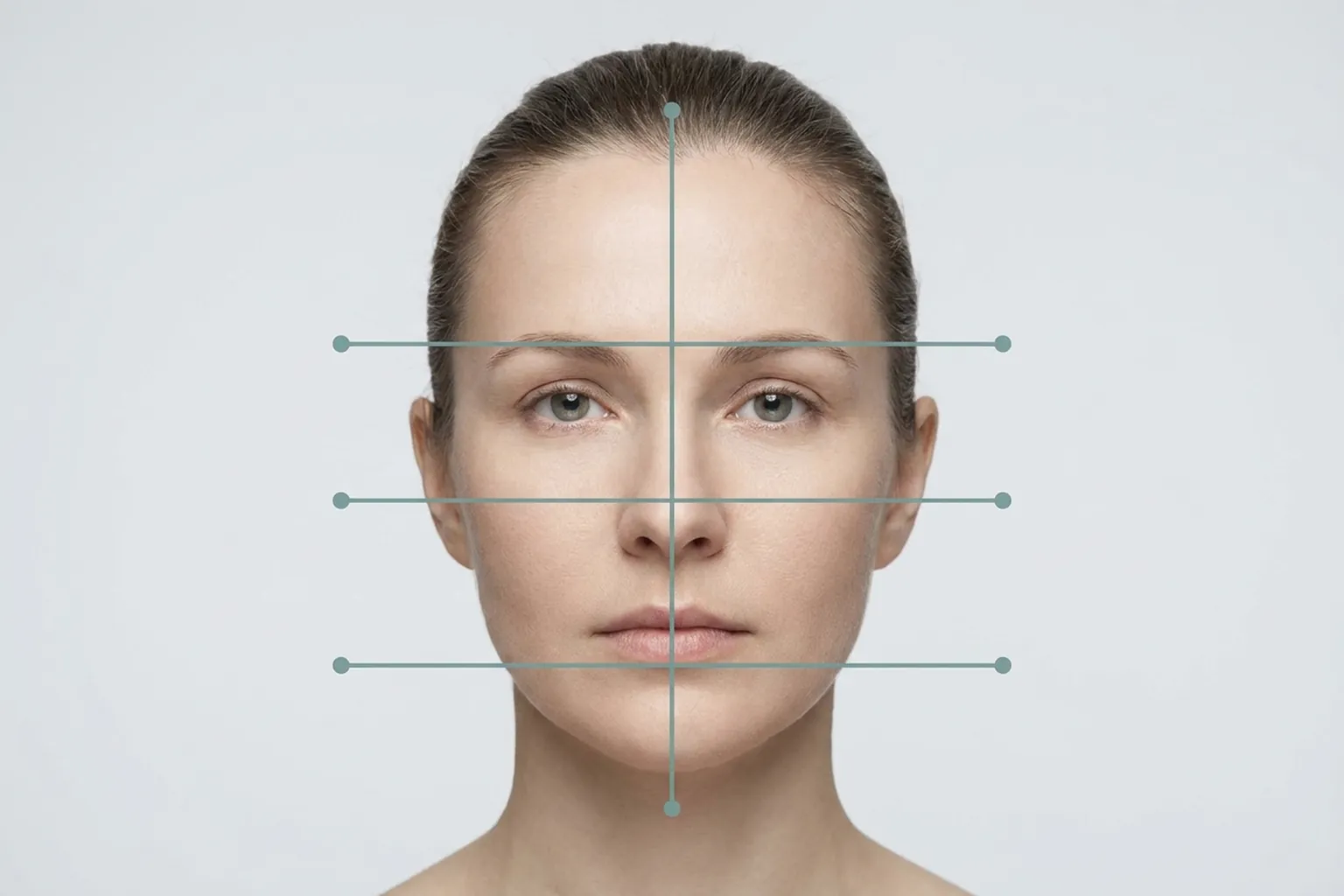
The detector reads the cheekbone width from points on the outline of the face near cheek level. That is the width of the whole face there, bone plus soft tissue, which is why the detector treats it as a width rather than a view of the bone. It measures widths and length. It does not measure how high the cheekbone sits or how far it projects, so it cannot tell you whether your cheekbones are high or low in the position sense.
The way each shape treats cheek width differs.
| Shape | How cheekbone width compares |
|---|---|
| Oval | Forehead a little narrower than the cheekbones, with a softly rounded jaw |
| Round | Length and width close to equal, with a soft jaw |
| Square | Forehead, cheekbones and jaw of similar width, with a wide, angular jaw |
| Oblong | Clearly longer than wide, with fairly straight sides |
| Heart | Forehead as wide as or wider than the cheekbones, narrowing to a pointed chin |
| Diamond | Cheekbones clearly the widest part, with a narrower forehead and chin |
Only the diamond description names the cheekbones as the widest part. That does not make diamond the shape of high cheekbones, because width and height are different questions. A face can be oval, square or heart-shaped and still have a cheek that reads as high or low in a photograph.
The detector reports a share for each shape plus the closest and the runner-up, because many faces sit between two shapes. Its profiles were calibrated on 22 faces, so read the result as a photo-based estimate and not a classification of a person. The face shapes guide compares all six side by side, and the facial thirds guide covers the vertical proportions that the length measurement relates to.
What the research does and does not say
The literature on the zygoma is anatomical and clinical. It describes the bone, the soft tissue over it and how both change, and it does not provide a scale of high and low cheekbones.
- Described: the zygomatic bone defines the front and side of the face and shapes the cheek contour. [1]
- Described: bizygomatic breadth is the maximum horizontal width between the zygomatic arches, which is the width used as a reference in anthropometry. [2]
- Described: the cheek includes separate fat compartments, and the zygoma varies in shape and size between groups of people. [4][5]
- Described: the midface skeleton and the soft tissue both change with age. [5][6]
- Not established by these sources: a definition or measurement of high versus low cheekbones, how common each is, or any link between cheekbone height and a face shape or any personal quality.
This guide does not rank cheekbones or say that any position is better or worse. It also gives no advice on cosmetic procedures, makeup or contouring, which need a different kind of expertise and, for medical decisions, an individual assessment. If you notice a new swelling, pain, numbness or a change after an injury, ask a clinician rather than relying on a photo.
To compare other proportions from the same photo, the Golden Ratio Face Test and the Face Symmetry Test answer different questions. The hairstyles guide covers how hair frames a face shape, and the free tools page lists everything that runs in your browser.
FAQ
High and low cheekbones are informal descriptions of appearance, not medical categories or grades.
What are high cheekbones?
High cheekbones is an informal term, and people use it for two things. One is how far the cheek projects, and the other is how high on the face its most prominent point sits. No source used here sets a standard definition or a cutoff.
How do I know if I have high cheekbones?
Use a straight-on photo with a neutral face and soft, even light from the front. Note where the widest and most prominent part of the cheek sits, nearer the eye or nearer the mouth, and compare it with your forehead and jaw widths. A photo cannot show how far the bone projects, so treat the result as an observation of appearance.
What is the difference between high and low cheekbones?
Both words describe where the most prominent part of the cheek sits on the face. High points toward the eye, and low points toward the mouth and jaw. They are informal labels with no agreed measurement, so two people may use them differently.
Are high cheekbones the same as a diamond face shape?
No. A diamond face shape is about width: the cheekbones are clearly the widest part, with a narrower forehead and a narrow, pointed chin. High cheekbones, in the sense of position, is a separate question that the face shape detector does not measure.
Why do my cheekbones look different in different photos?
A photo records light, camera distance, head angle and expression, not just bone. Strong side light adds shadow under the cheek, a smile changes the lower face, and a camera held very close stretches the midface. Take a few photos with the same setup before reading a difference as a change.
Do cheekbones change with age?
Reviews and dissection studies describe age-related changes in both the midface skeleton and the cheek's fat compartments. The amount and timing vary, and a single photo cannot separate bone from soft tissue. A new swelling, pain or a change after an injury is a question for a clinician.